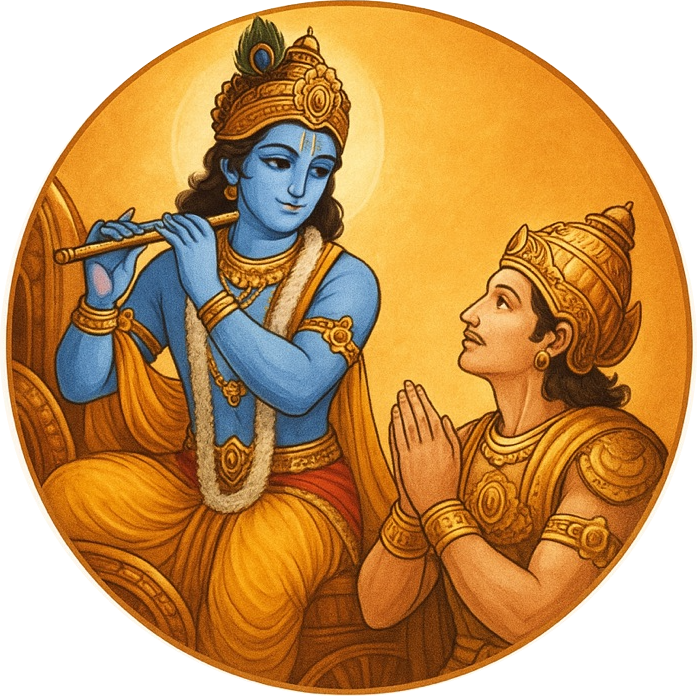
How to Read the Bhagavad Gita
1For Beginners
Start with Chapter 2 (Sankhya Yoga) for foundational concepts, then read Chapter 12 (Bhakti Yoga) for the path of devotion.
2Sequential Reading
Read from Chapter 1 through 18 to follow Arjuna's complete spiritual transformation and Krishna's systematic teaching.
3Thematic Study
Focus on specific themes: Chapters 3-5 for Karma Yoga, Chapters 7-12 for Bhakti Yoga, Chapters 13-18 for Jnana Yoga.
4Daily Practice
Read one verse daily with contemplation. Each verse contains enough wisdom for deep reflection and practical application.
5With Commentary
Use our video commentary and word-by-word translations to understand the deeper meanings and Sanskrit terminology.
6Apply Teachings
The Gita is meant for practical application. Reflect on how each teaching applies to your daily challenges and decisions.
Three Paths of Yoga
The Bhagavad Gita teaches three main paths to spiritual realization, often called the three yogas.
Karma Yoga
The Path of Action
The yoga of selfless action, performing one's duty without attachment to results. This path is ideal for active individuals who want to transform their work into worship.
Key Chapters: 3, 4, 5
Central Teaching: Detached action
Best For: Active personalities
Bhakti Yoga
The Path of Devotion
The yoga of love and devotion to the Divine. This path emphasizes surrender, faith, and emotional connection with God through prayer, worship, and service.
Key Chapters: 7, 9, 12
Central Teaching: Divine love
Best For: Emotional temperaments
Jnana Yoga
The Path of Knowledge
The yoga of wisdom and self-inquiry. This path involves understanding the true nature of reality through study, contemplation, and direct realization of the Self.
Key Chapters: 2, 13, 15
Central Teaching: Self-realization
Best For: Intellectual seekers